Dashboard Analytics
Unified analytics and research dashboard for GitHub Projects

The Challenge
Fragmented Project Views
Teams had to jump between boards, spreadsheets, and notes to understand what was blocked, trending, or worth prioritizing.
Hidden Dependencies
Cross-board dependencies were buried in task descriptions, making it hard to see upstream blockers or downstream impact.
Security & Risk Review
Governance teams needed clear, auditable risk summaries without slowing delivery. The security agent now automates the review.
The Solution
Unified Analytics + Agent Workspace
Built a single dashboard that aggregates GitHub Projects, maps dependencies, and surfaces analytics plus opportunity signals. A dedicated agent workspace handles task analysis and the finalized security review pipeline.
- ->Unified Schema: Standardized metadata fields across boards for consistent analytics.
- ->Dependency Graph: Visual blockers and cascading impacts across teams.
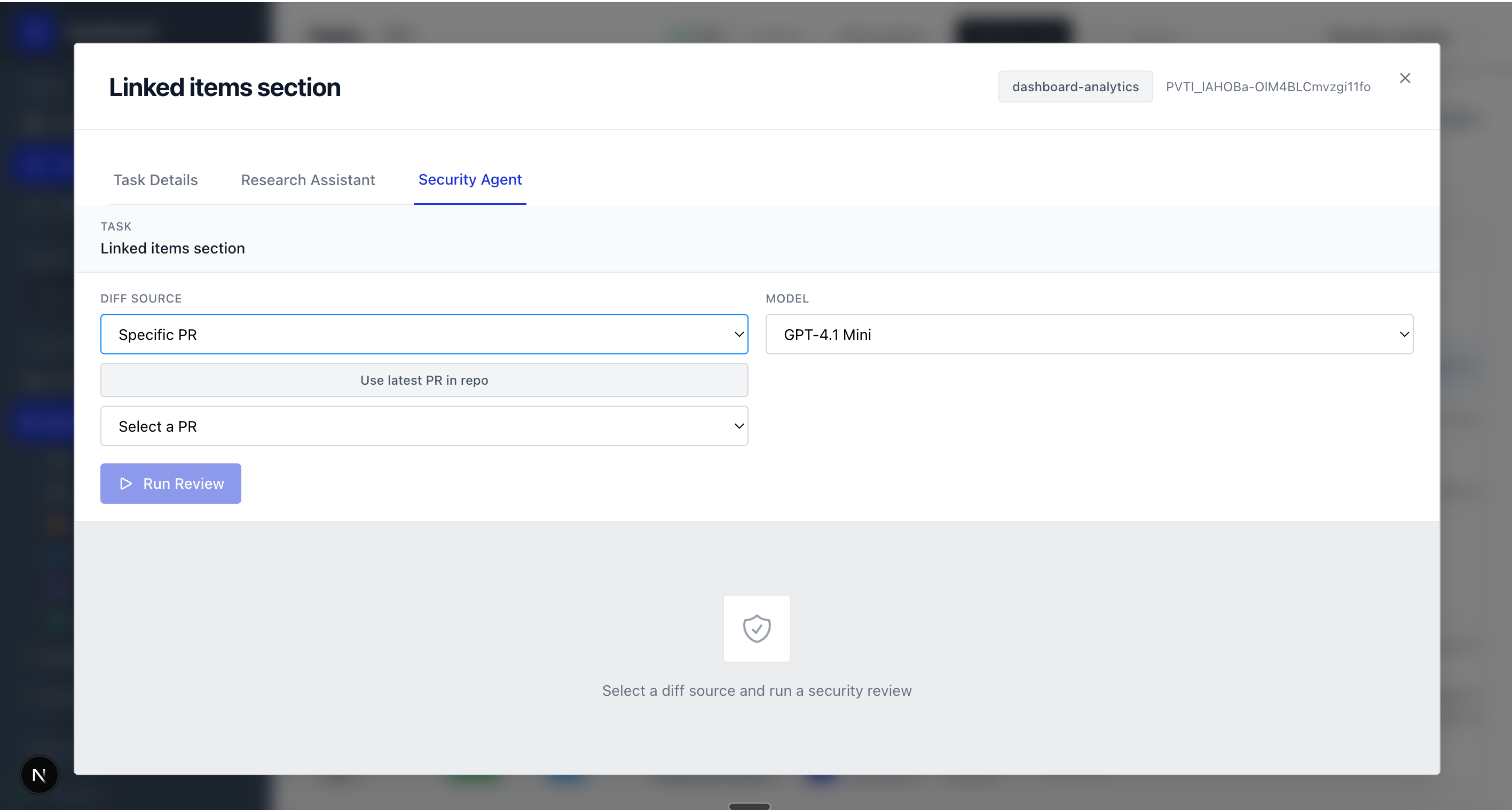
- ->Security Agent: Automated risk reviews embedded in the workflow.
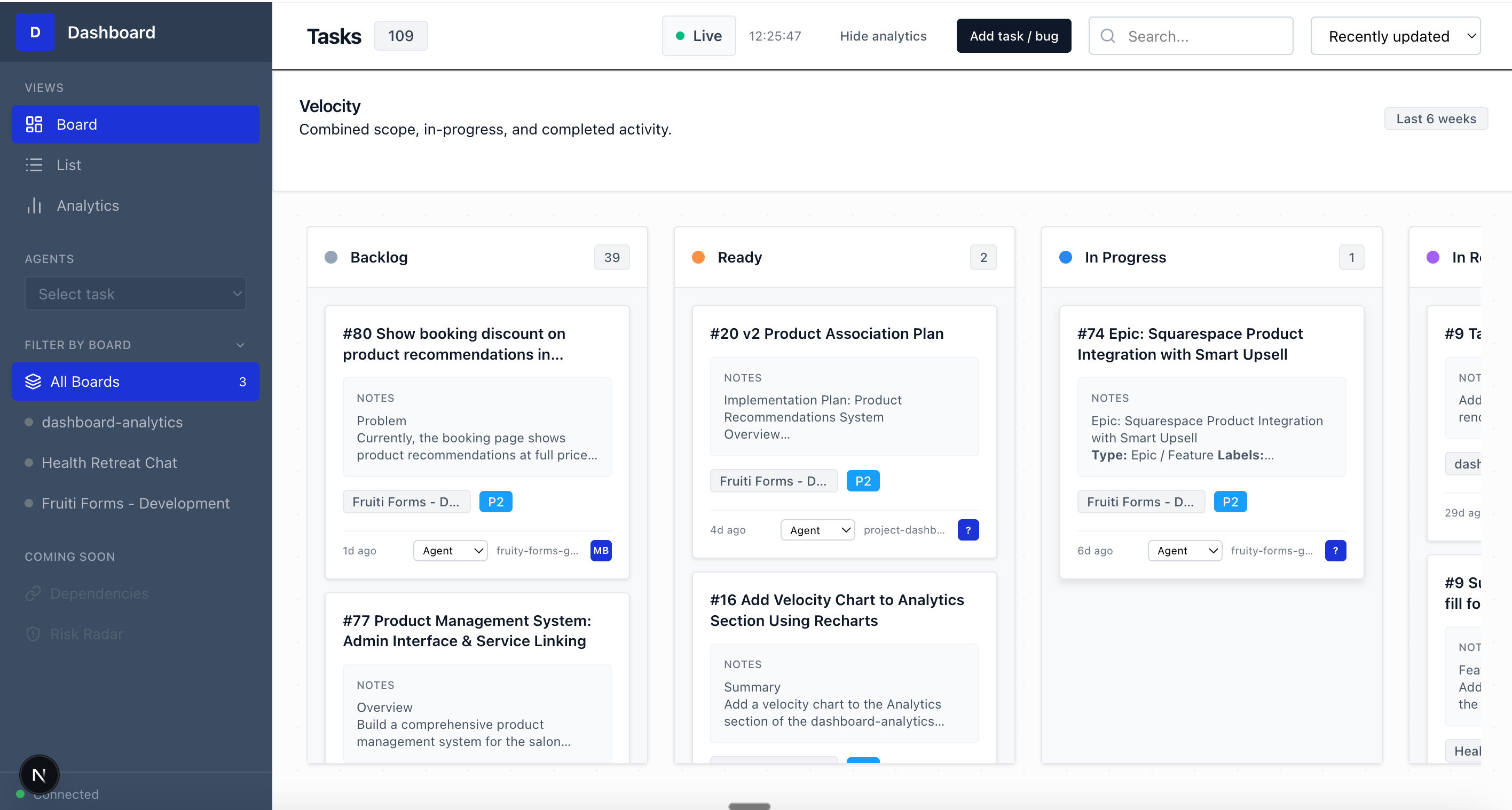
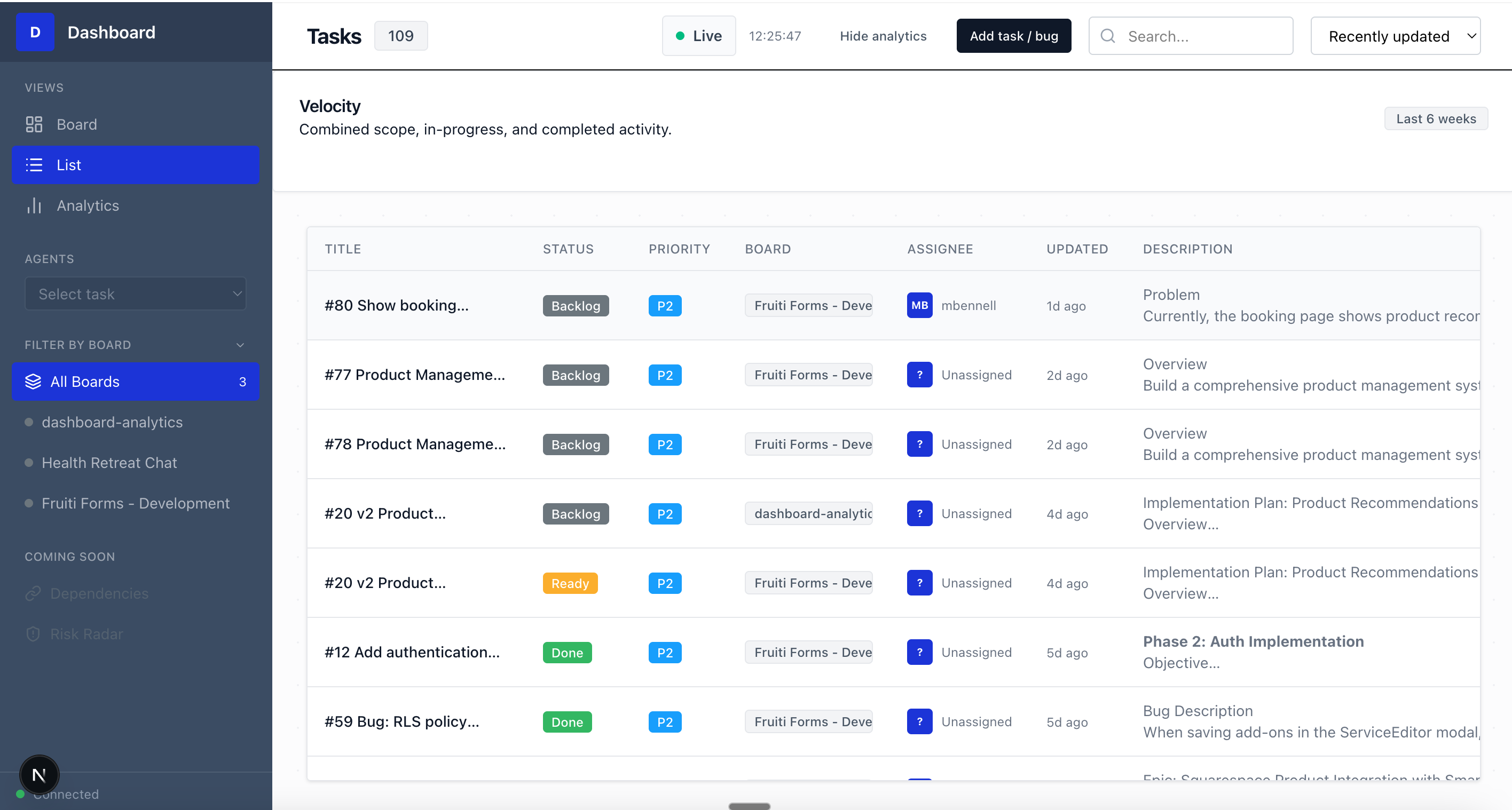
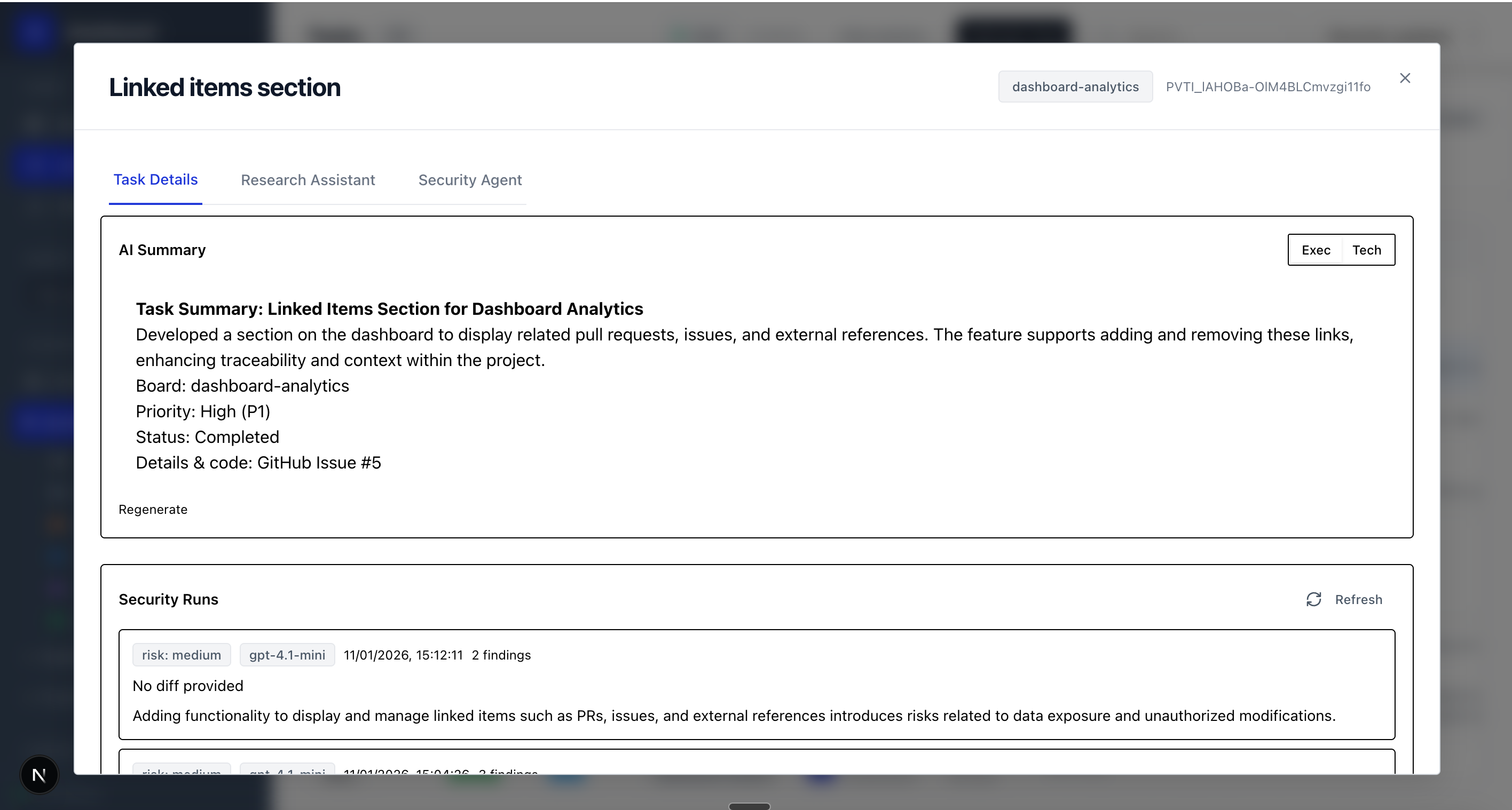
Product Screens
Four core surfaces covering kanban flow, project lists, task details, and security agent insights.
Key Features
Unified Dashboard Lens
Analytics Overview
Single surface for task status, trending signals, and opportunity backlog across multiple GitHub boards.
Dependency Mapping
Connected views highlight upstream blockers and downstream impact before prioritization.
Agent-Driven Workflows
Agent Workspace
Built-in task analysis, research summaries, and automation hooks for LLM-assisted decision support.
Security Review
The finalized security agent evaluates risk, flags sensitive dependencies, and generates audit-ready notes.
Technical Architecture
LLM-Ready Analytics
Structured reporting pipeline with prompt-ready summaries for trends, blockers, and opportunity signals.
Unified Schema
Extensible metadata fields normalize tasks across boards to support analytics, triggers, and automation.
Access Layer
GraphQL + REST adapter with pagination and rate-limit handling for reliable ingestion.
Trigger-Based Workflows
Event hooks power notifications, risk checks, and follow-up automation as project signals shift.
Data + Automation Stack
A modular service layer supports analytics, reporting, and automation while keeping security checks embedded in the flow.
Frontend
Data
Automation
if (signals.blockedTasks > threshold) {
  await notifySlack({
    channel: "#project-ops",
    message: "Dependencies piling up — review blockers now."
  });

  await securityAgent.review({
    projectId,
    scope: "dependency-risk"
  });
}
Results & Impact
Faster Prioritization
Unified boards and dependency insights cut down research time and surface the right work faster.
Opportunity Discovery
Trend tracking makes it easier to spot strategic opportunities early.
Security Confidence
Automated security agent reviews provide audit-ready summaries without slowing delivery.
Next Project
AI Booking System
Conversational AI agent processing salon bookings with voice capabilities.